What’s Inside
If you have been holding off on applying for AdSense because you think your traffic is too low, you are not alone. This is one of the most common questions from new bloggers and website owners. Many people delay applying for months, waiting to hit a number that does not actually exist in Google’s official policy.
Quick Answer
- No, Google AdSense does not have an official minimum traffic requirement. Sites with very little traffic get approved regularly, while sites with thousands of visitors sometimes get rejected.
- Google cares more about content quality, site structure, and policy compliance than raw visitor numbers.
Why This Matters
This misunderstanding causes real problems. Some publishers wait too long to apply, losing months of potential ad revenue. Others try to inflate traffic artificially, which violates AdSense policies and can lead to permanent account bans.
Traffic numbers feel like an easy thing to measure, so people naturally assume Google uses them as a checkpoint. In reality, Google’s review process focuses on whether your site provides genuine value to a human reader. A small site with ten well-written, original articles often has a better chance than a large site filled with thin or duplicate content.
What Google Actually Evaluates
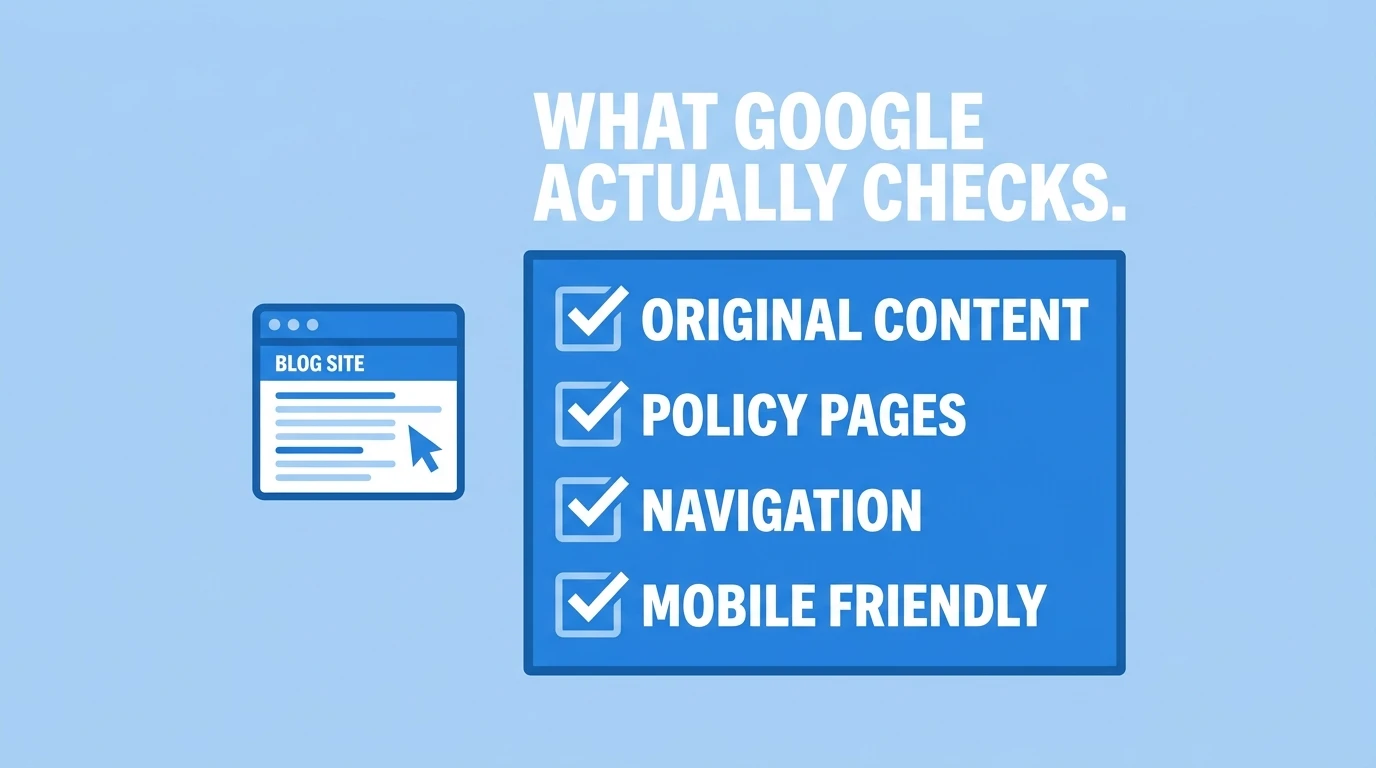
Google’s automated and human reviewers look at several factors that have nothing to do with visitor count.
| Factor | What Google Checks |
|---|---|
| Original content | Is the content written by you, or copied/spun from other sources? |
| Site navigation | Can users find pages easily through menus and internal links? |
| Policy pages | Do you have a Privacy Policy, About page, and Contact page? |
| Content depth | Do articles genuinely answer a reader’s question? |
| Site age | Is the domain established enough to show consistent activity? |
| Mobile usability | Does the site work well on phones and tablets? |
None of these rows mention a traffic threshold. This is confirmed in Google’s own guidance on how to become a Google Publisher, where the focus is placed on producing original, valuable content rather than hitting visitor benchmarks.
Why the “Minimum Traffic” Myth Exists
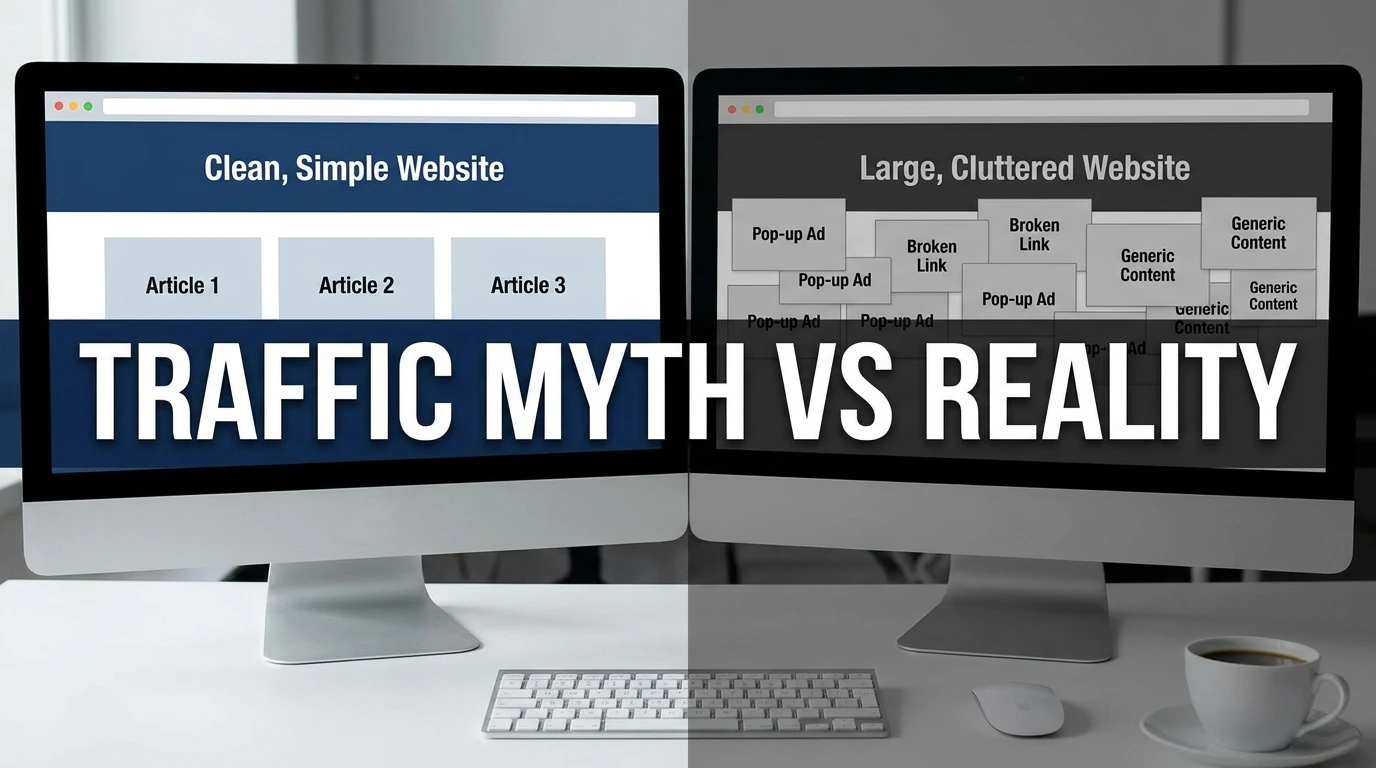
The myth likely comes from three sources.
- Confusion with YouTube monetization. YouTube’s Partner Program does have specific watch hour and subscriber requirements, and people sometimes assume AdSense for websites works the same way.
- Forum misinformation. Many blog comments and forum threads repeat outdated or incorrect claims as fact.
- Correlation, not causation. Sites with more traffic often also have more content, better structure, and stronger SEO. It looks like traffic caused the approval, when really it was the content quality that came along with growing that traffic.
If you are unsure whether your site meets the actual requirements Google looks for, running it through an AdSense Eligibility Checker can give you a clearer picture than guessing based on visitor counts.
How Much Content Do You Actually Need
There is no exact number Google publishes, but based on patterns seen across many approved and rejected applications, sites with fewer than 15 to 20 substantial articles tend to struggle more, not because of a rule, but because it is harder to demonstrate consistent quality with very little content.
Focus on:
- Articles that are genuinely useful, not written just to hit a word count
- Clear structure with headings that make content scannable
- Original images or examples where relevant
- No duplicate or scraped content anywhere on the site
Common Mistakes
Applying with an unfinished site. Missing policy pages or broken navigation are far more likely to cause rejection than low traffic.
- Buying traffic or using bots. This violates Google Publisher Policies and can result in permanent disapproval, regardless of how good your content is.
- Focusing only on quantity. Twenty rushed, shallow articles usually perform worse in review than ten well-researched ones.
Ignoring mobile experience. A large share of Google’s review and of your future ad impressions happen on mobile devices.
Best Practices Before Applying

- Publish content consistently for at least a few weeks before applying, so Google sees an active site.
- Add required pages: Privacy Policy, About, Contact, and Disclaimer if you run affiliate content.
- Fix broken links and confirm every page loads correctly.
- Check your site’s mobile display on an actual phone, not just a browser resize.
- Review your content against Google’s Publisher Policies before submitting.
Pro Tip: Instead of tracking daily visitor counts, track how many of your articles fully answer a real search query from start to finish. A site with fewer but complete, well-researched articles almost always outperforms a larger site full of half-finished posts, both in AdSense review and in long-term SEO.
Frequently Asked Questions
Does AdSense have an official minimum traffic number?
No. Google has never published a specific visitor threshold required for approval.
Can a brand new site with almost no traffic get approved?
Yes, if the content is original, well-structured, and the site meets Google’s policy requirements.
Will more traffic increase my chances of approval?
Not directly. More traffic can indirectly help if it comes from more content, but visitor count alone is not a review factor.
Is buying traffic a good way to speed up approval?
No. This violates AdSense policies and can lead to permanent account disapproval.
How many articles should I have before applying?
There is no official number, but most successful applicants have at least 15 to 20 substantial, original articles.
Traffic volume is not the gatekeeper most people assume it to be when it comes to AdSense approval. Google reviews content quality, site structure, and policy compliance far more closely than visitor counts. Publishers who focus on building genuinely useful content tend to get approved faster than those chasing arbitrary traffic goals.
Before applying, double check your policy pages, navigation, and content depth rather than obsessing over analytics numbers. If this cleared things up for you, share it with another site owner who might be waiting on the wrong milestone.