Picking a domain feels like a small decision until you’re staring at an AdSense rejection email and wondering if the domain itself was the problem.
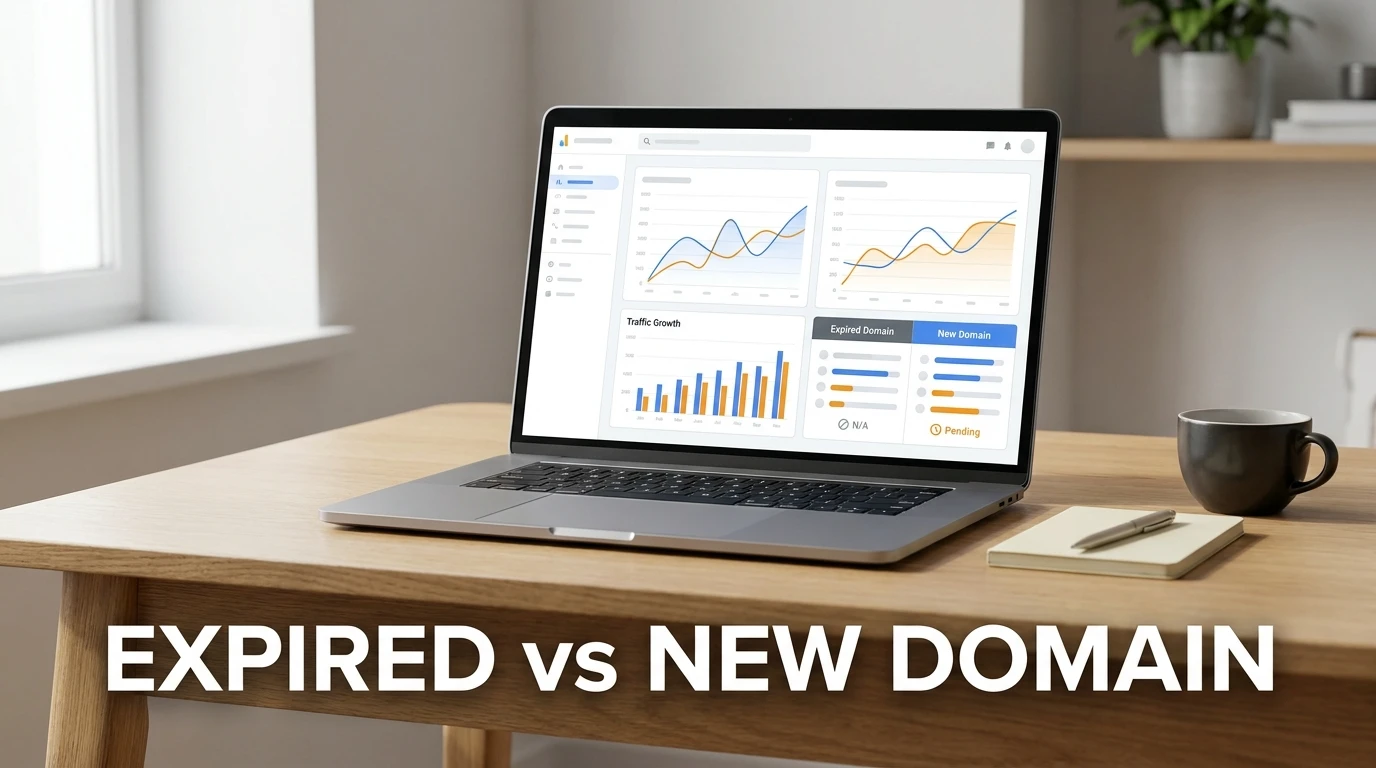
Every year, publishers ask the same question before they even publish a single post: should I buy an expired domain with some existing authority, or start clean with a brand new one? The expired domain vs new domain for AdSense debate matters more in 2026 than it did a few years ago, because Google now looks harder at domain history, not just content quality.
This isn’t a coin flip. Each option comes with trade-offs that directly affect how fast, and how safely, your site gets approved.
Quick Answer
- A new domain usually gets approved faster and with less risk, because it has no history for Google to question.
- An expired domain can also get approved, sometimes even faster if it already ranks and has traffic, but only if its past content, backlink profile, and prior use are clean.
- If an expired domain has spam history, thin content, or unrelated prior use, it can actually slow down or block approval entirely.
Why This Matters
A lot of applicants think domain choice is a technical detail that Google’s review team ignores. It isn’t. Domain history feeds directly into how Google evaluates trust signals during review.
Here’s what’s actually at stake:
- Approval speed: A domain with baggage can trigger closer scrutiny, which delays your review.
- Manual actions: If a domain previously had a Google manual action, that history can follow the domain even under new ownership.
- Content mismatch: Google increasingly checks whether a domain’s past use matches its current use. A domain that once hosted an unrelated or low-value niche and suddenly pivots to fresh, unrelated content raises flags.
- Wasted time: Applicants who buy expired domains without checking their history often spend weeks troubleshooting rejections they didn’t see coming.
If you’re unsure whether your current site, expired or new, is ready to apply, running it through an AdSense Eligibility Checker before you submit can save you an unnecessary rejection cycle.
New Domain: What You’re Actually Getting
A brand new domain has no ranking history, no backlink profile, and no prior owner baggage. That’s both its strength and its weakness.
Advantages
- Clean slate with zero risk of inherited penalties
- Full control over content strategy from day one
- Easier to build topical consistency, which supports E-E-A-T
- No surprises during Google’s review process
Disadvantages
- No existing authority or traffic to lean on
- Takes longer to build organic visibility
- You need to hit AdSense’s content and traffic expectations from scratch
New domains tend to get approved on their own merits: content quality, site structure, navigation, and policy compliance. There’s nothing else for Google to weigh against you.
Expired Domain: What You’re Actually Getting

An expired domain can carry existing backlinks, aged trust signals, and sometimes leftover organic traffic. That sounds appealing, but it only works in your favor if the domain’s past is clean.
Advantages
- Potential head start on domain authority
- Can retain some organic traffic if content stays topically similar
- May already have indexed pages, which speeds up crawling
Disadvantages
- Past manual actions or algorithmic penalties can transfer risk to the new owner
- Unrelated prior content (a repurposed niche) can trigger scrutiny under Google’s expired domain abuse enforcement
- Backlink profiles built on manipulative tactics become your liability
- Harder to verify true history without proper tools
Google’s policy on expired domain abuse specifically targets domains repurposed mainly to exploit leftover ranking signals with unrelated, low-value content, and enforcement of this has gotten more precise, not looser, heading into 2026. That means buying an expired domain without checking its backlink profile, past niche, and ownership history is a real gamble.
Expired vs New Domain: Side by Side Comparison

| Factor | New Domain | Expired Domain |
|---|---|---|
| Setup speed | Instant, no history to review | Requires history audit first |
| Approval risk | Low, judged purely on new content | Depends entirely on past use |
| Existing traffic | None | Possible, if niche-aligned |
| Backlink risk | None | Can inherit spammy links |
| Manual action risk | None | Can inherit prior penalties |
| Best for | Beginners, long-term brand building | Experienced publishers who can audit domains properly |
Common Mistakes
Buying an expired domain based on Domain Authority alone. A high DA score often just means the domain built authority through tactics Google now flags. A strong score with an incoherent content history is a liability, not a shortcut.
- Assuming a fresh redirect wipes the slate clean. Redirecting an expired domain to a new site doesn’t erase algorithmic issues tied to the link profile. Those effectively travel with the domain.
- Ignoring topical continuity. If an expired domain was previously a recipe blog and you turn it into a finance site overnight, that mismatch is exactly the pattern Google’s expired domain enforcement looks for.
- Applying for AdSense before checking indexation. Whether new or expired, if your domain isn’t properly indexed and crawlable, approval stalls regardless of domain age.
Skipping a traffic and CTR baseline. Publishers sometimes apply without understanding how their existing pages perform. Running numbers through an AdSense CTR Calculator helps you see if your ad placement strategy is realistic before you even get approved.
Best Practices
- If you’re going the expired domain route, check archived content on the Wayback Machine before buying.
- Run a backlink audit through a reputable tool and look for spammy anchor text patterns.
- Confirm the domain has no history of manual actions using Google Search Console once you have access.
- Keep your new content topically aligned with the domain’s original use if you’re repurposing it.
- If starting fresh, focus your first few months on original, well-researched content rather than volume.
- Review Google’s Publisher Policies directly before publishing anything you’re unsure about.
For a broader readiness check before applying, our Complete AdSense Eligibility Checklist for WordPress Sites walks through the technical and content requirements Google expects regardless of domain age.
Pro Tip
If you’re evaluating an expired domain, don’t just check its current content, check what it looked like two or three ownership changes ago using archived snapshots. A domain that quietly passed through three unrelated niches in five years is a bigger red flag than one that changed hands once for a legitimate reason like a business closing.
Frequently Asked Questions
Does domain age affect AdSense approval?
Domain age alone isn’t a direct approval factor. What matters is whether the domain’s history, content, and backlink profile are clean and consistent with how you’re using it now.
Can an expired domain with a manual action still get approved?
It’s possible, but risky. Manual actions are tied to the site and don’t automatically transfer, but underlying algorithmic issues from the link profile often do carry over and can affect trust signals.
Is a new domain always safer for AdSense?
Generally yes, because there’s no history for Google to weigh against you. The trade-off is that you’ll need to build traffic and authority from zero.
How long should I wait before applying with a new domain?
There’s no fixed waiting period. Focus on having enough original, well-structured content and clear navigation rather than counting days since registration.
Should beginners use expired domains at all?
It’s not recommended unless you know how to properly audit backlinks, ownership history, and past content. Beginners are usually better off starting clean and building organically.
Both expired and new domains can get approved for AdSense in 2026, but they require different levels of homework. A new domain is the lower-risk path because there’s nothing in its past to work against you. An expired domain can offer a head start, but only if you actually verify its history instead of assuming a high authority score means it’s safe.
Whichever route you choose, focus on content quality, clean site structure, and policy compliance, since those still carry the most weight in Google’s review. If this comparison helped you decide, share it with another publisher weighing the same choice, and drop your own domain experience in the comments below.

1 thought on “Expired Domain vs New Domain for AdSense Approval 2026”