Table of Contents
Most website owners write their About Us page in five minutes, then wonder why AdSense keeps rejecting their site. It happens more often than you’d think. A thin About page doesn’t just look unfinished, it tells Google reviewers there’s no real person or purpose behind the website.
If you’ve been rejected with a vague reason like “low value content” or “insufficient information,” your About page might be part of the problem, even if the rest of your site looks fine.
Quick Answer
- Your About Us page needs to clearly explain who runs the site, what the site is about, why it exists, and how readers can contact you.
- It should read like it was written by a real person for real readers, not stuffed with keywords or copied from a template.
Why This Matters

Google’s AdSense reviewers, and the automated systems that support them, look for signals of a genuine, trustworthy website. Your About page is one of the fastest ways to show that.
Complete AdSense Eligibility Checklist for WordPress Sites
A weak About page raises questions. Who is behind this content? Are they qualified to write about this topic? Is this a real business or a placeholder site built just to run ads?
Common mistakes here include:
- Writing two or three generic sentences with no real detail
- Copying an About page template word for word
- Leaving out any way to contact the site owner
- Never mentioning who actually writes the content
These issues connect directly to Google’s Experience, Expertise, Authoritativeness, and Trustworthiness guidelines, often shortened to EEAT. Your About page is one of the clearest places to demonstrate all four.
What to Include on Your About Us Page
1. Who You Are
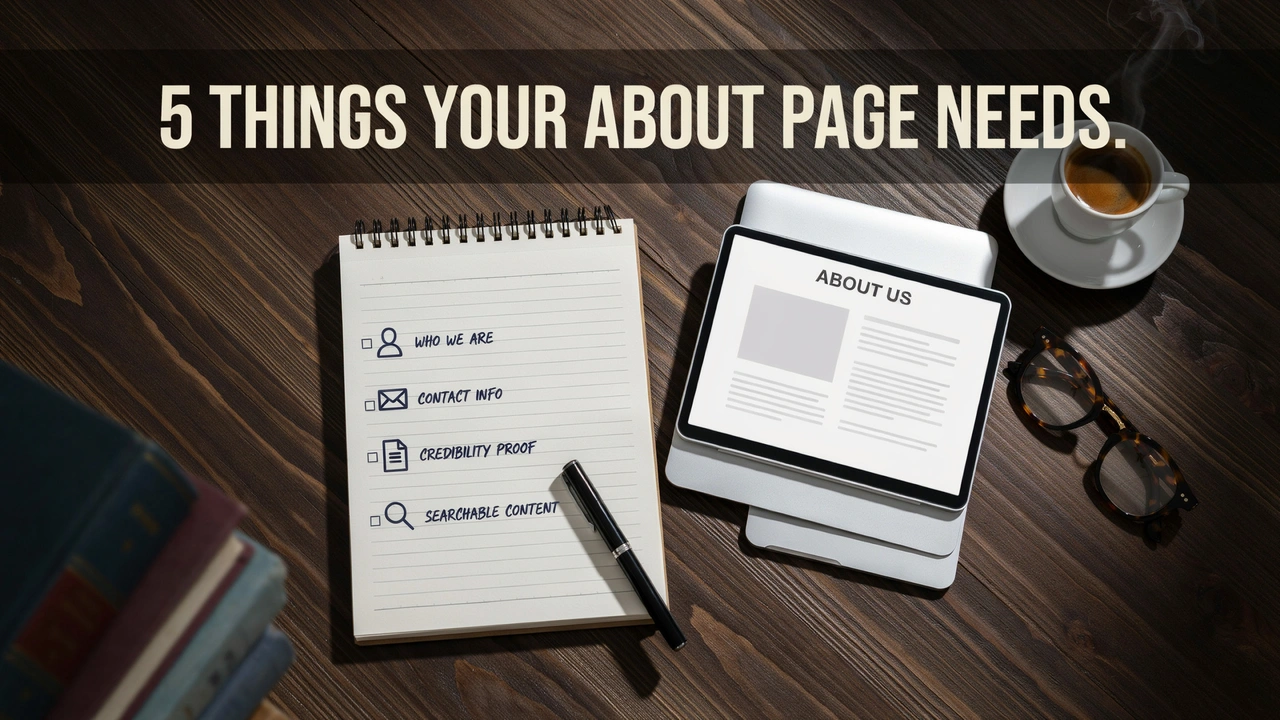
State clearly who owns or runs the website. This can be an individual, a small team, or a company. Vague phrases like “our team of experts” without names or details tend to hurt more than help.
If you’re a solo blogger, say so. Readers and reviewers trust a real name more than an anonymous brand voice.
2. Why the Site Exists
Explain the purpose of your website in a few sentences. Are you sharing personal experience, professional expertise, or research on a topic you care about? This gives context to everything else on your site.
Why I Got Rejected for “Low Value Content” (How I Fixed It)
3. What Readers Can Expect
Briefly describe the type of content you publish. If you run a personal finance blog, mention that you cover budgeting, saving, or investing basics, for example. This helps both readers and Google understand your site’s focus.
4. Relevant Experience or Background
You don’t need formal credentials for every niche. But if you have relevant experience, mention it. A parenting blog written by an actual parent, or a tech review site run by someone who’s used the products, carries more weight than an unexplained “expert” claim.
5. Contact Information
Include a way for readers to reach you, whether that’s an email address, a contact form, or both. This is one of the simplest trust signals you can add, and it’s often missing on rejected sites.
| About Page Element | Why It Matters for AdSense |
|---|---|
| Real name or team info | Confirms a genuine site owner |
| Site purpose | Shows clear intent and focus |
| Content topics | Helps establish topical relevance |
| Relevant background | Supports EEAT signals |
| Contact method | Builds trust and transparency |
Before making changes, it helps to check where your site currently stands. Running your site through an AdSense Eligibility Checker can highlight other readiness gaps alongside your About page, so you’re not fixing one issue while missing another.
Common Mistakes
Using a generic template. Many free WordPress themes come with placeholder About page text. Publishers forget to replace it, and it’s obvious to anyone reading it.
How To Get Google AdSense Approval In 1 Minute? Real Truth
- Writing only two or three sentences. A short About page isn’t automatically bad, but if it doesn’t answer who, what, and why, it reads as incomplete.
- Making unverifiable claims. Saying you’re a “certified expert” without any explanation of your background can do more harm than saying nothing at all.
- Skipping contact details entirely. No email, no contact form, no way to reach the site owner. This is a quiet but common reason reviewers hesitate to approve a site.
Copying another site’s About page. Duplicate or near-duplicate About content across niche sites is easy to spot and reflects poorly on originality.
Best Practices
- Write your About page in your own words, in your own voice
- Keep it between 150 and 400 words, long enough to be useful, short enough to stay readable
- Update it if your site’s focus or team changes over time
- Add a photo or short bio if you’re comfortable doing so, it adds a human element
- Link to your Contact page and, if relevant, your Privacy Policy for added transparency
How Utility Websites Get AdSense Approved in 2026
These practices align with guidance in the Google Publisher Policies, which emphasize authentic, valuable content across every page of your site, not just your blog posts.
Pro Tip
Read your About page out loud. If it sounds like something you’d actually say to a stranger explaining your website, it’s working. If it sounds like marketing copy or a template, rewrite it in plainer language.
Frequently Asked Questions
Does my About Us page really affect AdSense approval?
Yes. Reviewers use it to judge whether your site is run by a real, identifiable person or team, which feeds into overall trust and quality signals.
How long should my About Us page be?
There’s no strict word count, but 150 to 400 words is usually enough to cover who you are, what your site offers, and why it exists.
Do I need to reveal my full identity?
No, but you should be transparent about your role and purpose. A first name and a clear description of your site’s focus is often enough.
Can I use an About page template?
You can use one as a starting point, but rewrite it fully in your own words. Reviewers and readers can usually tell when text is unedited boilerplate.
Should my About page include links to other pages?
Yes, linking to your Contact page and Privacy Policy is a good practice and reinforces that your site is transparent and easy to navigate.
Your About Us page is a small part of your website, but it carries real weight during AdSense review. A clear, honest page that explains who you are, what your site covers, and how to reach you builds trust with both readers and Google.
Avoid generic templates, vague claims, and missing contact details, since these are easy fixes that make a noticeable difference. Take a few minutes this week to review and improve your own About page before your next application. If this helped you spot gaps on your own site, share it with another publisher working toward approval.