If you’ve built your blog on Blogger.com or another free platform, you’ve probably typed some version of this question into Google late at night. You’re not alone. This is one of the most searched AdSense questions from beginners who don’t want to spend money on hosting before they know if monetization is even possible.
The good news is that the platform you use matters far less than most people assume. What matters is what you build on it.
Quick Answer
- Yes, Blogspot can still get AdSense approval in 2026, and so can a free domain, as long as the site meets Google’s content and policy requirements.
- Google approves websites based on content quality, originality, and compliance with its publisher policies, not based on whether you paid for hosting or a custom domain.
Why This Matters
Many beginners assume a rejection means their platform is the problem. In most cases, the real issue is thin content, missing policy pages, or a site that isn’t ready to be indexed properly.
This misunderstanding causes two common mistakes. Some people abandon a perfectly good free platform and spend money migrating to a paid domain, only to get rejected again for the same content issues. Others keep resubmitting the same underdeveloped site, assuming persistence alone will eventually work.
Understanding what Google actually evaluates saves you time, money, and frustration. It also helps you build a site that performs well in Google Search, not just one that passes an ad review.
Blogspot (Blogger.com) and AdSense: What Google Actually Checks
Blogger is owned by Google, which is part of why so many beginners assume there’s a special advantage or disadvantage tied to it. In reality, Blogger sites go through the same AdSense review as any other website.
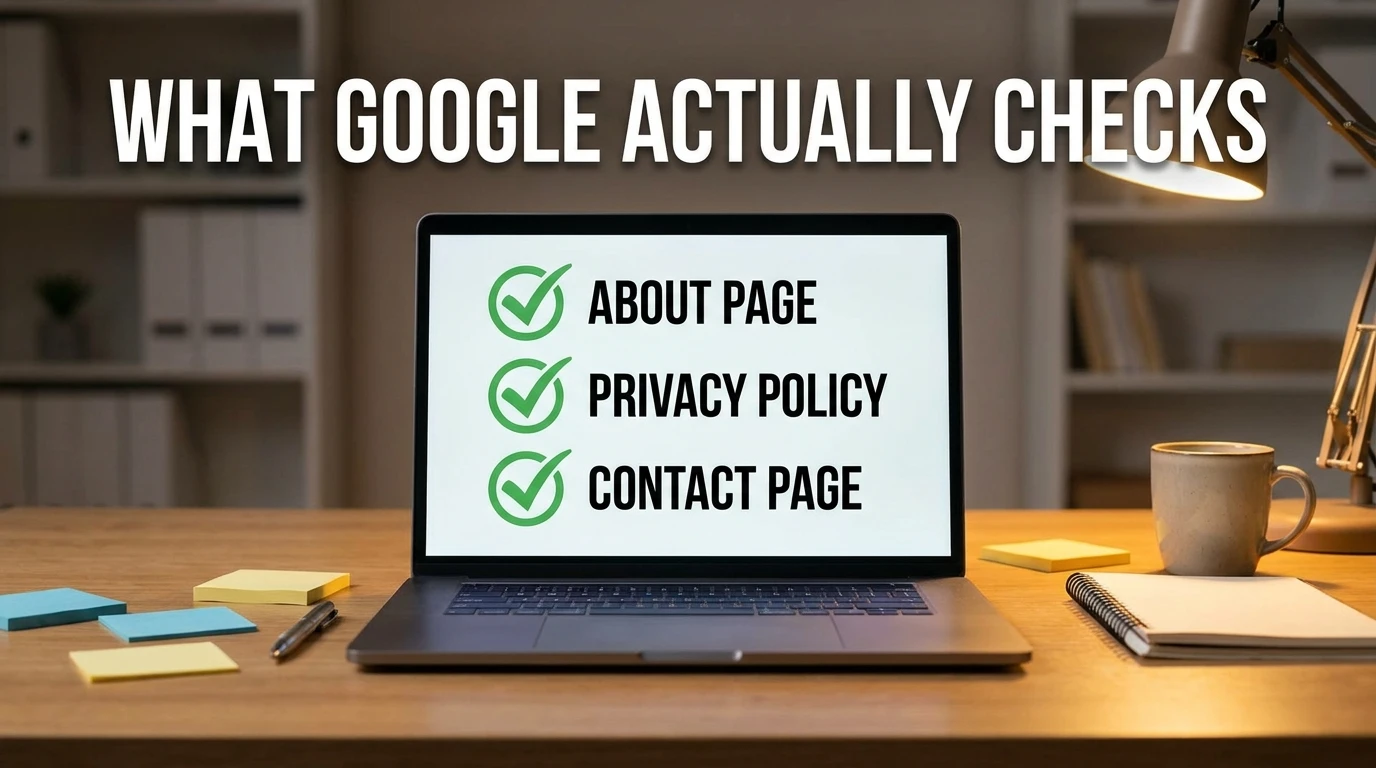
Google’s AdSense program policies focus on a few consistent factors, regardless of platform:
- Original, useful content that isn’t copied or spun from other sites
- Enough published content to demonstrate the site has real value
- Clear navigation, including an About page, Contact page, and Privacy Policy
- No content that violates Google Publisher Policies, such as adult content, violence, or copyrighted material used without permission
- A site that’s easy to crawl and doesn’t rely on broken templates or excessive pop-ups
A Blogspot site that checks these boxes has a realistic shot at approval. A custom-domain WordPress site that skips these basics will still get rejected.
Does a Free Website Builder Reduce Your Approval Chances?
Free website builders, including Blogger, Wix’s free tier, and similar tools, don’t automatically lower your approval odds. What can hurt you is the template quality some free builders use by default, since cluttered layouts and intrusive ads from the builder itself can interfere with AdSense review.
Before applying, check that your site loads cleanly, that your content is easy to read, and that no third-party ads are already cluttering the page. If you’re unsure whether your site is ready, running it through an AdSense Eligibility Checker before you apply can save you a rejection and a 30-day wait.
Free Domain vs Custom Domain: What Really Changes
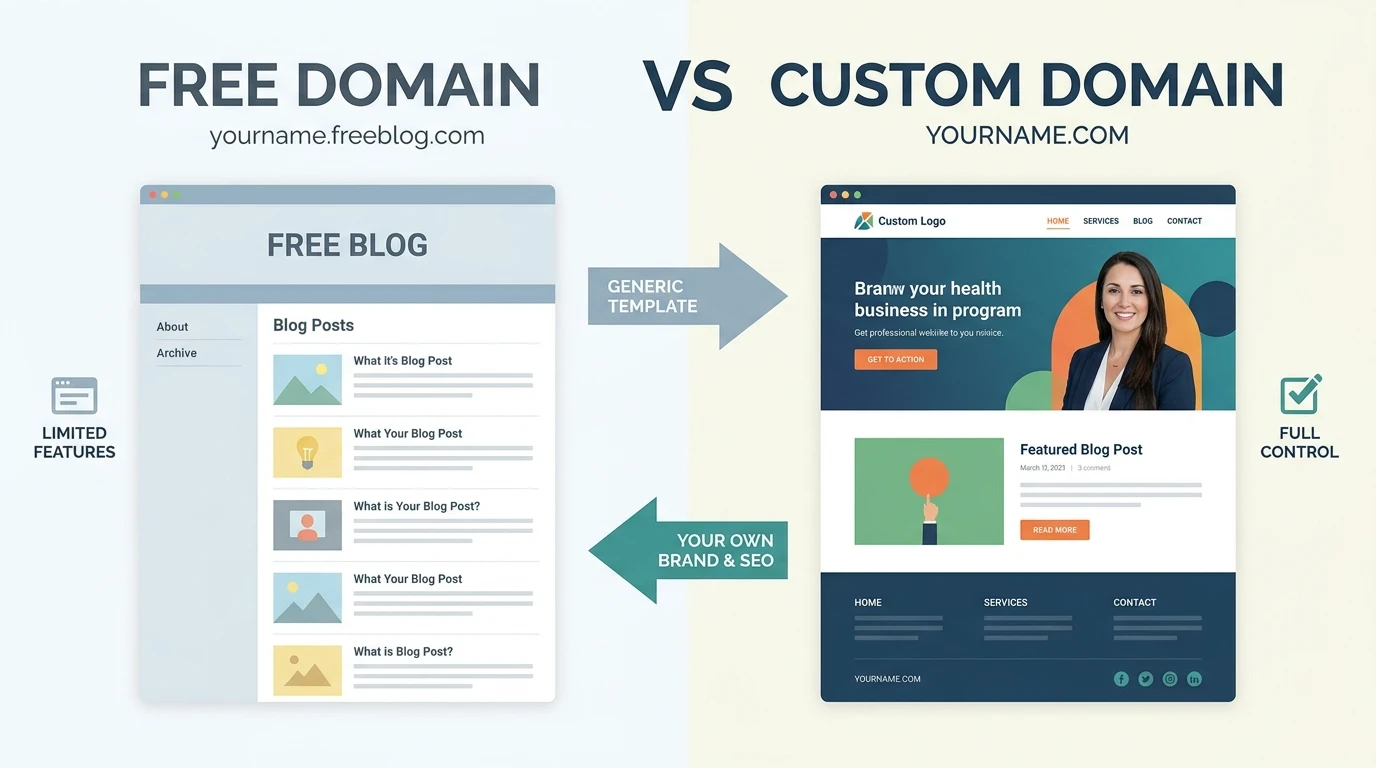
This is where a lot of confusion comes from. A free subdomain, like yourblog.blogspot.com, doesn’t disqualify you from AdSense. Google has approved countless sites on free subdomains over the years.
Here’s a simple breakdown of what actually changes between free and custom domains:
| Factor | Free Domain/Subdomain | Custom Domain |
|---|---|---|
| AdSense eligibility | Not blocked | Not blocked |
| Perceived professionalism | Lower | Higher |
| Branding control | Limited | Full control |
| Long-term SEO flexibility | Limited if you migrate later | Easier to build long-term authority |
| Risk if platform shuts down | You lose the domain | You keep ownership |
Custom domains offer long-term advantages for branding and SEO, but they are not an AdSense requirement. If budget is tight, a well-built free site can still qualify.
Common Mistakes That Cause Rejection
- Publishing too few posts. Google needs enough content to evaluate quality and consistency. A handful of short posts rarely convinces reviewers.
- Skipping policy pages. A missing Privacy Policy is one of the most common and easily avoidable rejection reasons.
- Using duplicate or AI-spun content. Google’s Helpful Content System is designed to detect content that doesn’t add unique value, and this affects both search rankings and AdSense review.
- Applying too early. A brand-new site with three posts published yesterday hasn’t had time to build the content depth reviewers look for.
- Ignoring mobile experience. Most traffic and most AdSense reviews happen through a mobile lens, so a site that looks broken on phones sends the wrong signal.

Best Practices That Actually Improve Approval Odds
- Publish a solid base of content, ideally 20 to 30 well-written posts, before applying.
- Add an About page that explains who you are and what the site covers.
- Include a Privacy Policy that references how ads and cookies are used, based on Google’s Publisher Policies.
- Make sure your site is mobile-friendly and loads quickly.
- Focus on topics you can cover consistently, since Google favors sites with clear subject focus over scattered, random content.
- Check your site’s current readiness with a Check AdSense Eligibility review before submitting your application.
Pro Tip
If your site is on a free subdomain, don’t wait for a custom domain to apply. Instead, spend that time building 20 to 30 genuinely useful posts on your current platform. Content depth and originality influence approval far more than the domain name in your browser bar.
Frequently Asked Questions
Does Blogspot.com get approved for AdSense in 2026?
Yes, Blogspot sites can be approved as long as they meet Google’s content quality and policy requirements. The platform itself isn’t a barrier.
Can I get AdSense approval with a free domain like .blogspot.com or .wordpress.com?
Yes, free subdomains are accepted for AdSense review. Google evaluates content and policy compliance, not domain type.
Is a custom domain required for AdSense approval?
No, a custom domain is not required. It can help with branding and long-term SEO, but it’s not part of Google’s eligibility criteria.
Does using a free website builder hurt my SEO or AdSense chances?
Not directly, but cluttered templates or intrusive default ads on some free builders can create a poor experience that affects both SEO and AdSense review.
How long should I wait before applying for AdSense on a new site?
There’s no fixed waiting period, but most sites do better after publishing 20 to 30 quality posts and giving Google time to index and understand the content.
Blogspot and other free platforms can absolutely get AdSense approval in 2026, as long as the underlying content meets Google’s quality and policy standards. The domain you use matters far less than the depth, originality, and usefulness of what you publish.
Most rejections trace back to thin content, missing policy pages, or applying too early rather than the platform itself. Focus on building a genuinely helpful site first, and treat the domain decision as a branding choice rather than an eligibility requirement.
If this helped clarify things, share it with another blogger still deciding between a free platform and a custom domain, and drop your own experience in the comments.