If you run a calculator, converter, PDF tool, or any kind of utility website, you’ve probably noticed something frustrating. Your tool works perfectly. People use it. And Google AdSense still rejects your application for “low value content.”
You’re not imagining it. Utility websites face a specific rejection pattern that’s different from what blogs deal with, and the rules around it have shifted a lot over the past few years.
Quick Answer
- Utility websites earn AdSense approval by building real EEAT around the tool, not just launching the interface.
- Publishing genuine articles that explain your expertise, back up your results, and give Google a clear sense of what your site is about is what signals authority and trust during review.
Why This Matters
Google’s AdSense review is fundamentally an editorial quality check. Reviewers aren’t testing whether your calculator produces the right output. They’re trying to answer questions like: who built this, why does it exist, and is there enough original content to judge.
A bare tool page gives them almost nothing to go on. That’s why so many otherwise functional utility sites get flagged for low value content, even when the tool itself is genuinely useful.
This matters for SEO too. Google’s Helpful Content System rewards pages that demonstrate real expertise and purpose. A page that’s just an input box and a result box struggles to rank well in search, not just in AdSense review, because it signals the same thing to both systems: thin content, unclear purpose.
How Utility Websites Used to Get Approved (And Why That’s Changing)
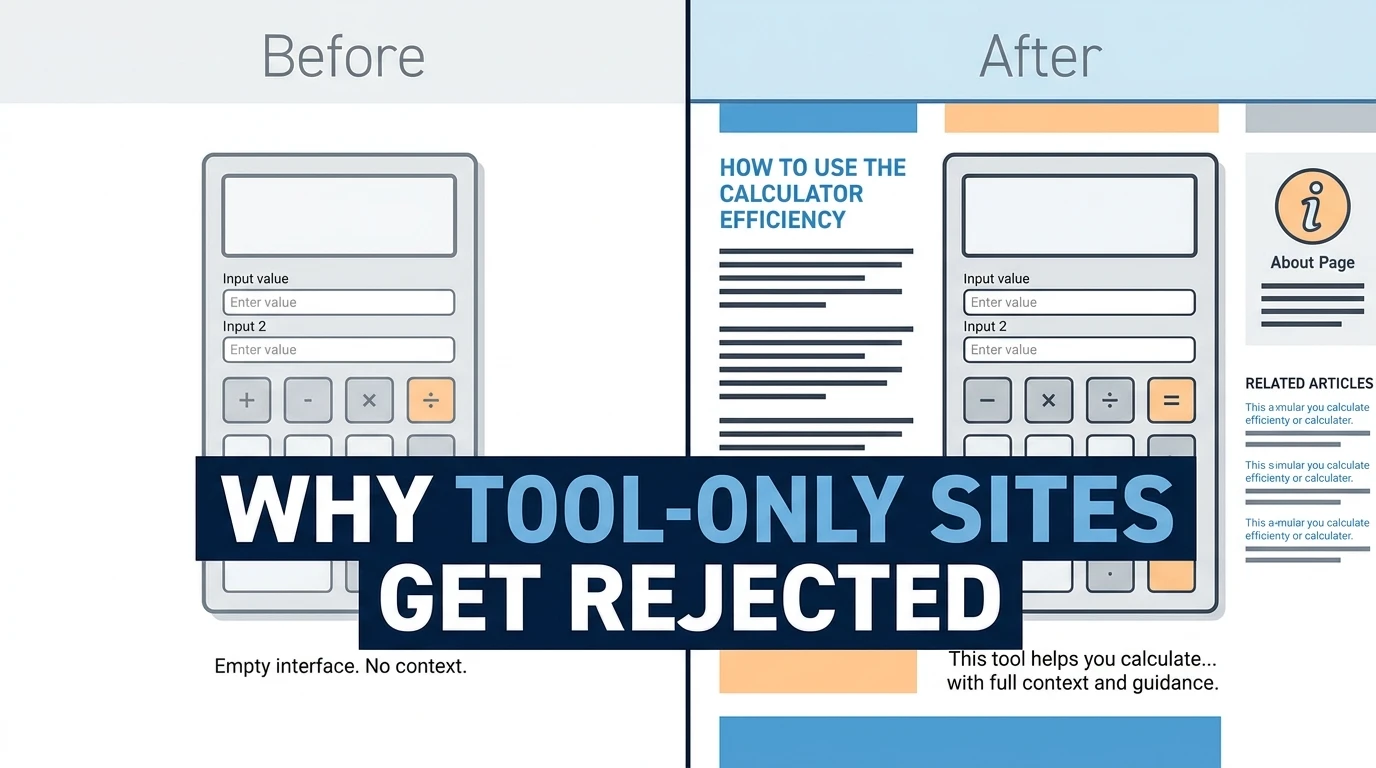
A few years ago, it was much easier to get a bare-bones tool approved. A simple calculator with a short paragraph above it and a generic privacy policy page was often enough to pass review. Traffic mattered more than depth, and Google’s reviewers weren’t weighing editorial quality as heavily against functional tools.
How To Get Google AdSense Approval In 1 Minute? Real Truth
That approach doesn’t work anymore. Google AdSense’s 2026 policies apply the same content quality bar to tool sites as to blogs and publishers, and reviewers actively look for original, substantial text alongside any interactive feature. Sites created mainly to host ads around thin functionality are increasingly rejected during review or restricted after approval.
The shift makes sense once you see it from Google’s side. The web is full of duplicate calculators and converters built from the same templates. Without original content explaining the tool’s purpose, accuracy, or use cases, Google has no way to tell your site apart from thousands of near-identical ones. So the old “just launch the tool and apply” method is largely dead. What replaced it is a content-first approach where the tool supports the article, not the other way around.
What Google’s Reviewers Actually Look For on Utility Sites
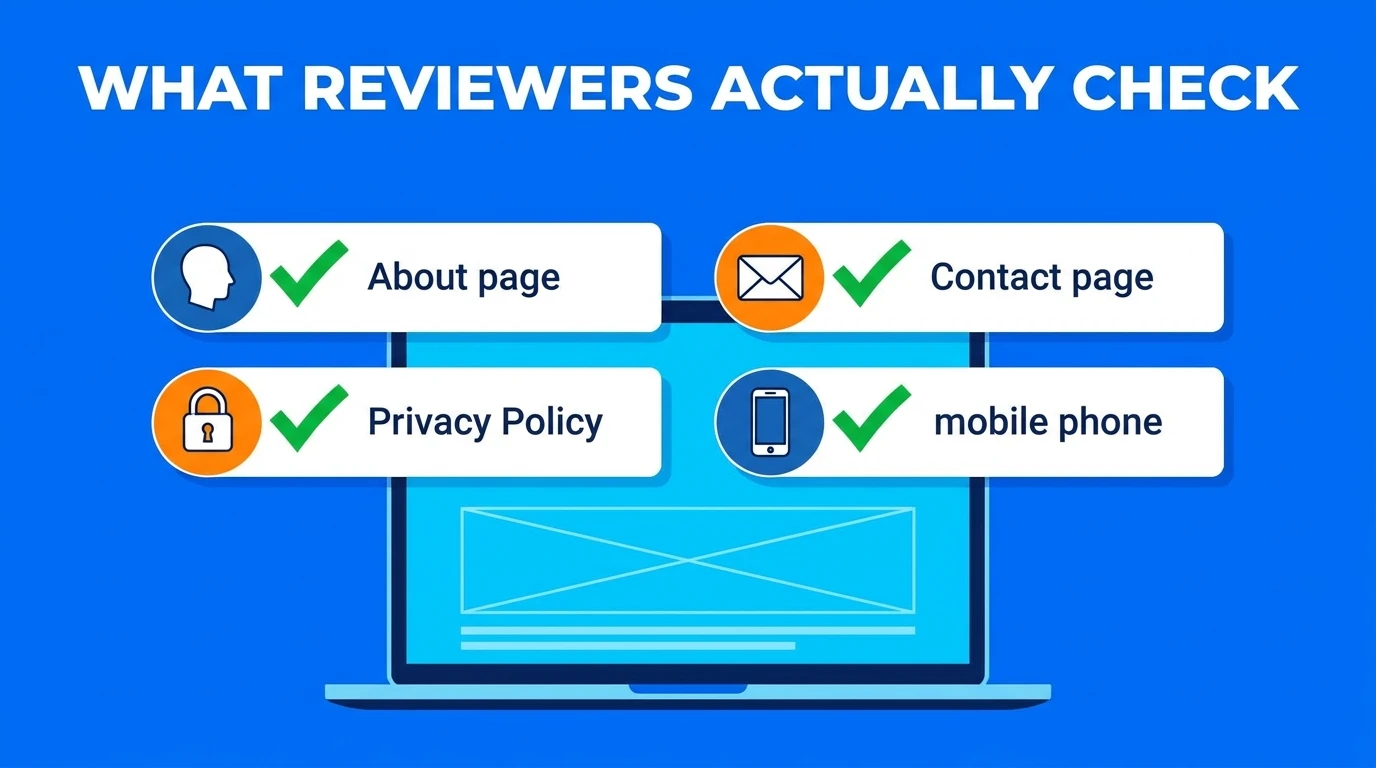
Reviewers are checking whether your site behaves like a real publication with a working feature attached, not a script with a domain name. In practice, that comes down to a few consistent signals.
| Signal | What It Looks Like on a Tool Site |
|---|---|
| Original content | Published articles around the tool and related search queries, showing depth of expertise and authority on the topic, not just a single explainer page |
| Clear purpose | A stated audience and use case, not just “free online calculator” |
| Trust pages | About, Contact, and a Privacy Policy that discloses data use |
| Site structure | Working navigation, a homepage, and more than one page of content |
| Policy compliance | No invalid click incentives, no adult or copyrighted content |
| Technical basics | HTTPS, mobile-friendly layout, fast load times |
If you’re unsure how your own site measures up against these signals, running it through an AdSense Eligibility Checker before you apply can save you a rejection cycle.
Adding Editorial Content Without Diluting Your Tool
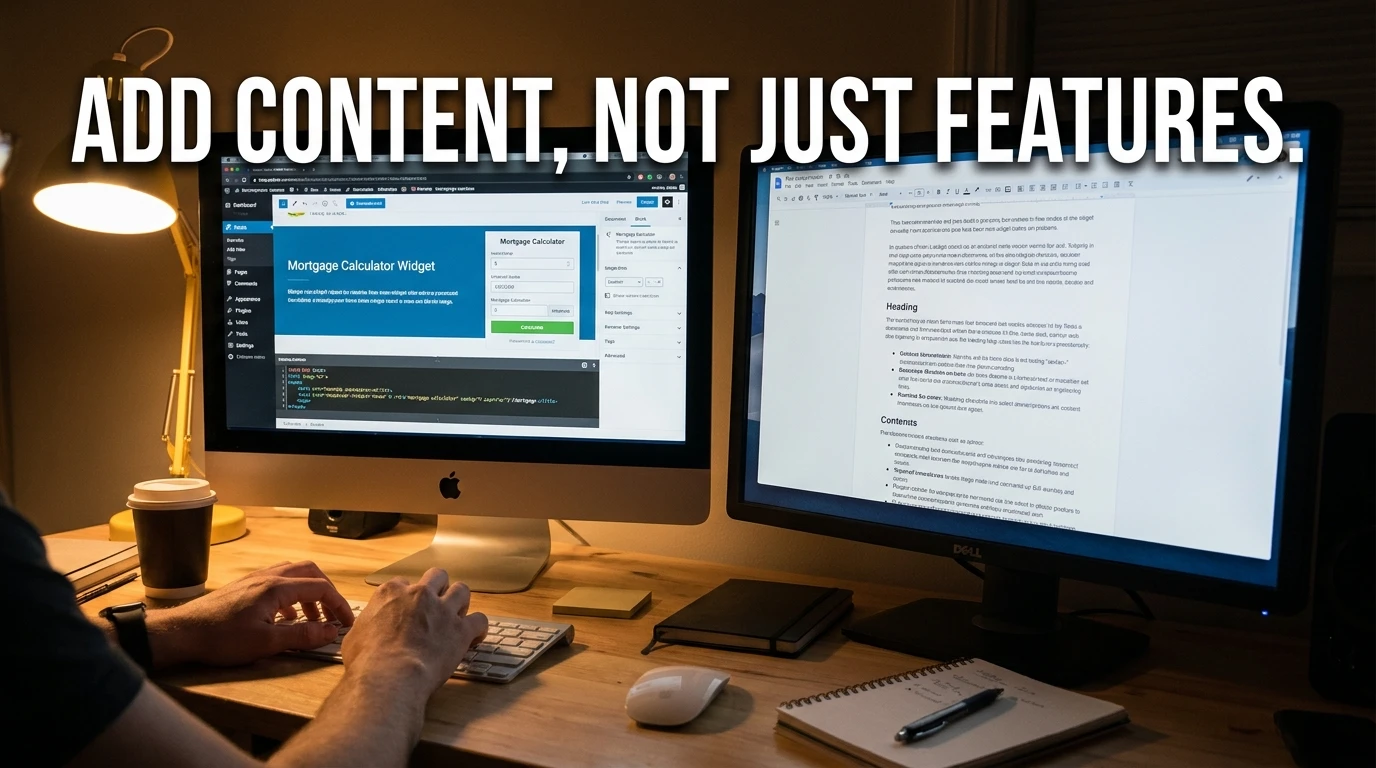
The goal isn’t to bury your tool under filler text. It’s to give context that a reviewer, and a real user, actually benefits from.
AdSense Minimum Traffic Requirement: What Google Checks
A few practical ways to do this:
- Write a short explainer above the tool covering what problem it solves and who needs it
- Add a “how this is calculated” or “how this works” section with real detail, not vague marketing language
- Include a FAQ addressing the specific questions users type into Google about your tool’s category
- Publish a few supporting articles on your site that go deeper into the topic your tool covers
For example, if you run a YouTube-related utility, a supporting article on monetization requirements alongside a YouTube Watch Time Calculator gives reviewers both a functional feature and real editorial depth to evaluate.
Common Mistakes Utility Site Owners Make
Applying with only the tool page live. A single page with no supporting content, no About page, and no Contact page gives Google almost nothing to review. Most rejections trace back to this.
- Writing a two-sentence intro and calling it content. Thin, generic filler text above a tool doesn’t satisfy the editorial bar. Reviewers can tell the difference between genuine explanation and padding added just to look substantial.
- Skipping the privacy policy details. A generic, copied privacy policy that doesn’t mention your actual data practices or ad personalization disclosures is a common and avoidable rejection reason.
Ignoring mobile experience. Google evaluates sites on a mobile viewport first. A tool that’s hard to use on a phone hurts both approval odds and user experience.
Applying too early. Launching a tool and applying the same day, before you’ve built any supporting pages, is one of the most common patterns behind quick rejections.
Best Practices for Utility Website Owners
- Publish at least a handful of genuinely useful articles alongside your tool before applying
- Make sure every page loads correctly and works on mobile
- Add complete About, Contact, and Privacy Policy pages with real detail, not templates
- Explain your tool’s methodology in plain language somewhere on the page
- Check your site’s readiness honestly before applying, rather than guessing
- If you’re rejected, read Google’s specific reason in the Policy Center and fix that exact issue before reapplying
Pro Tip
If you’re building a utility site from scratch, write the supporting article first and design the tool second. Sites where the content was an afterthought almost always read as thin to reviewers, but when the explanation comes first, the tool naturally fits into a page that already has real substance around it.
How do I get approved Google Adsense for my tools website
Frequently Asked Questions
Can a calculator or converter website get AdSense approved in 2026?
Yes, but only when it’s paired with original content explaining the tool’s purpose, audience, and methodology. A bare interface with no supporting text is one of the most common rejection reasons for utility sites.
Why does Google reject utility websites for “low value content” even when the tool works fine?
AdSense review is an editorial quality check, not a functionality test. Google needs enough original text to judge who you are and whether your site is trustworthy, and a working tool alone doesn’t provide that.
How much content does a utility site need before applying?
Google doesn’t publish a fixed number, but a single tool page with no articles, About page, or Contact page rarely passes review. Aim for enough genuine explanatory content that a reviewer can understand your site’s purpose.
Did utility websites get approved more easily in the past?
Yes. Thin tool sites with minimal supporting content passed review more often in earlier years. Google’s 2026 standards apply the same editorial bar to tool sites as to blogs, so that older approach rarely works now.
What’s the fastest way to check if my utility site is ready for AdSense?
Review your site against Google’s core requirements, including original content, working navigation, complete legal pages, and mobile usability, before applying. Tools like an AdSense Eligibility Checker can help you spot gaps early.
Utility websites can absolutely get AdSense approved in 2026, but the bar has moved from “does it work” to “is this a real publisher site.” The old approach of launching a bare tool and applying immediately rarely succeeds anymore.
Adding genuine explanatory content, complete trust pages, and a clear sense of purpose gives Google what it needs to say yes. Take an honest look at your site against these standards before you apply again. If this helped clarify things, share it with another tool site owner who’s stuck on the same rejection message.